

Achieving more together: As of January 1, 2026, we have become the 13th shareholder of VGS: Our company, Rieck Entsorgungs-Logistik from Neuss, is now part of the shareholder group of VGS Vermarktungsgesellschaft für Sekundärrohstoffe. For nearly forty years, this platform for waste management companies has been organizing an efficient cycle of supply and demand—and turning a wide variety of secondary raw materials into a significant source of recyclable materials.
In addition to the unanimous approval of all twelve shareholders, our admission to the VGS naturally required meeting certain formal criteria, such as our certification as a specialized waste management company. However, our many years of experience and strong market position in the waste management sector also helped us succeed in the admission process. One thing is clear: For us, joining VGS is an important strategic step toward further developing our material flow management and sustainably strengthening our position in the recycling of recyclable materials.
Whether it’s plastics and waste paper from private households or waste from industry and commerce—the benefits of joint waste recycling are clear: VGS companies pool their waste streams, enabling them to process them more efficiently and secure better terms when marketing the resulting recyclable materials. This benefits customers, of course, but above all the environment: With sustainable, forward-looking solutions, waste becomes a valuable resource.
“By combining our strengths, we can respond even more quickly, as we can draw on VGS’s established infrastructure—even when large volumes need to be processed on short notice,” concludes Daniel Gartmann. “Conversely, VGS also benefits from our service portfolio and can, for example, have recyclables compressed in our channel baling press.”
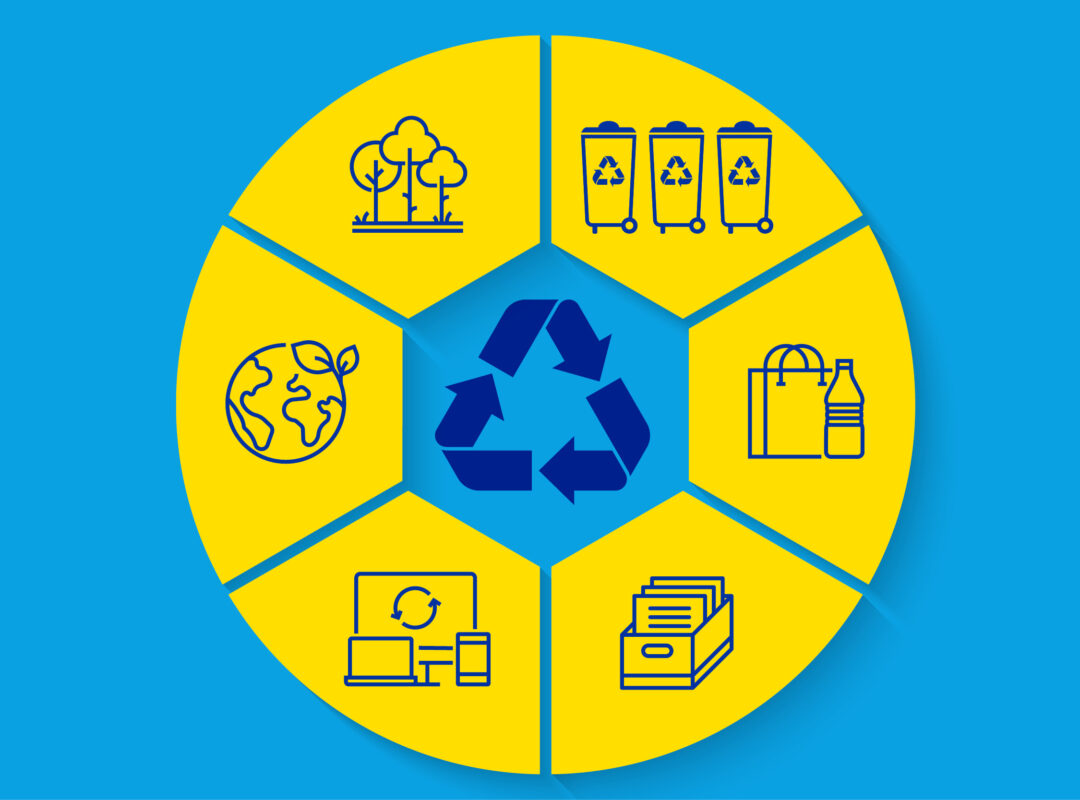
The safe recovery of secondary raw materials is a key driver of greater sustainability: it conserves natural resources by keeping valuable materials in circulation in line with the principles of the circular economy, thereby reducing the need to extract primary raw materials. In addition, recycling often saves energy compared to manufacturing new products. At the same time, recycling reduces environmental impact through the controlled treatment of hazardous materials and lowers greenhouse gas emissions compared to landfilling or uncontrolled disposal.
We accept the following recyclables:
- Paper / Cardboard / Paperboard
- Films / Plastics / Styrofoam
- Waste wood
- Garden clippings / Garden waste
- construction debris
- Scrap / Metals
- Electronic waste